
Creating a budget that works for you
A quick internet search on budgeting will show you just how complex budgeting can seem. With many competing ideas about how you should budget and what your financial priorities should be, deciding how to allocate your monthly income can feel like a daunting task. But at its core, the concept of a budget is simple: it’s a tool that lets you keep track of the money you spend each month and helps you find ways to gradually improve your financial situation. Here are some easy steps you can take to create a budget that works for you:
Identify Your Expenses
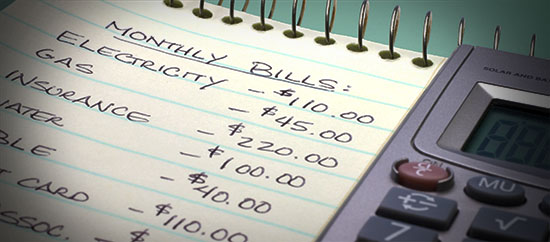
Before you can construct a budget, you first need to understand how you spend your money. Make a list of every transaction you made last month and separate them into two categories: necessities, like bills and groceries, and non-essentials, like eating out and entertainment. Once you have that list, compare it to your monthly income. Are you spending more than you make or do you have money left over at the end of the month?
Make Saving a Priority
Now that you have a picture of your monthly spending habits, write down some financial goals you’d like to achieve. Then revisit your monthly expenses. Most experts suggest saving a portion of your income – perhaps 5 percent – for unexpected, short-term needs like a car repair or that speeding ticket you didn’t deserve and investing a portion – perhaps 10 percent – for long-term goals like retirement. If you aren’t already doing that or don’t feel like you can, don’t panic. Just try to find ways to reduce your monthly spending. And even if you can’t save 15% of your income right now, don’t give up! Remember, saving 5 or 10 percent is still better than saving nothing.
Put it all Together
The most important part about any budget is putting it into practice. First, put a pay-yourself-first plan into place by contacting your bank to set up an automatic transfer for the amount of money you plan on saving and investing each month. Then figure out how to live on what’s left over. Start with the necessities and then decide how you want to allocate the balance – your so-called discretionary income – to the non-essentials. One more thing – and this is important – don’t get in the habit of using a credit card to cover those non-essential expenses you can’t afford. Nothing will blow up your budget faster than having to pay hefty interest charges. Using a debit card instead will force you to live within your means.
Establishing and sticking to a budget may seem like a boring and time-consuming task. But having a plan for your monthly income can help you make more efficient use of your money and free up the money you need to invest in your future. And that’s something to get excited about.
Vickie Mauldin Coleman retired from the United States Air Force in 2004 after 30 years, serving her two final tours as Command Chief Master Sergeant for United States Air Forces in Europe and Air Force Materiel Command. The mission of First Command Educational Foundation (FCEF) is to educate those who serve. Visit https://www.fcef.com/ to learn more.


Leave a Reply